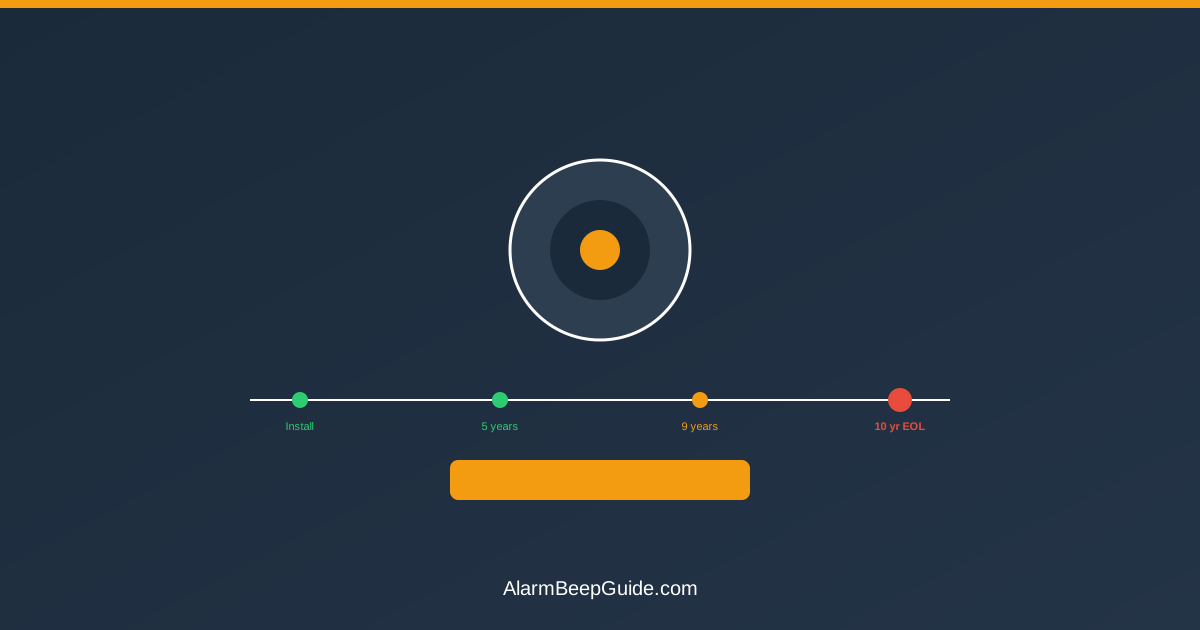
Home alarms do not last forever, but the right replacement date is printed by the manufacturer—not guessed from a generic beep chart. Check the product label and manual for the model, manufacture date, stated replacement age, battery type, and any end-of-life signal.
Replacement comes before repeated resets
A chirp that continues after the correct battery and manufacturer-approved reset may be an end-of-life or fault signal. Do not remove the battery or leave a disabled unit in place. If the alarm has reached the replacement date on its label, replace the entire unit and test the new one according to its instructions.
The NFPA advises replacing smoke alarms after 10 years and checking manufacturer instructions for care. Combination and CO alarms can have different timelines, so the specific product label still controls.
Find the right next step
- Smoke alarm end-of-life beeps: distinguish a maintenance chirp from a stated replacement warning.
- How long smoke detectors last: understand why the date on the unit matters.
- When to replace a CO detector: use model documentation for CO-sensor life and replacement.
- 10-year sealed-battery alarm chirping: why a sealed unit may need replacement rather than a battery.
- Cleaning dust from a smoke detector: clean only as the manufacturer permits.
Keep a simple alarm record
Record each alarm’s room, model, installation date, stated replacement date, and battery schedule. That short list helps you replace compatible units together and reduces guesswork when a signal starts overnight. It also gives renters and homeowners useful details when contacting a landlord, electrician, or manufacturer.
Source-led maintenance
The NFPA smoke-alarm guidance recommends regular testing and manufacturer-directed cleaning. Follow the manual for anything model-specific, especially hardwired, interconnected, CO, and combination alarms.