Placement matters as much as extinguisher type. A well-placed extinguisher is easy to reach, visible, and safe to use. This guide explains practical mounting height and placement tips for homes without getting overly technical.
Problem Explanation
If a fire starts, you need to reach an extinguisher quickly. Placement should make it easy to grab without getting too close to the fire. A great extinguisher in a bad location is less useful than a good one placed well.
Think of placement as part of your escape plan. You want to be able to grab the extinguisher while keeping a clear path to the exit.
Why Placement Matters
A proper location lets you access the extinguisher while keeping a clear exit path. It also keeps the extinguisher visible so you do not waste time searching.
The goal is to place it where you can grab it on the way out if needed.
In many cases, moving an extinguisher just a few feet can improve access and reduce risk.
Common Home Placement Rules
These simple rules work for most homes:
- Keep extinguishers visible and reachable.
- Do not hide them under sinks or behind doors.
- Place them near exits so you can leave if the fire grows.
- Keep them away from heat sources.
- Mount them at a consistent height so everyone can find them.
If you have more than one extinguisher, consider placing one near the kitchen and one near sleeping areas. This keeps coverage balanced across the home.
If you keep only one, place it where you spend the most time and where exits are easy to reach.
Recommended Mounting Height
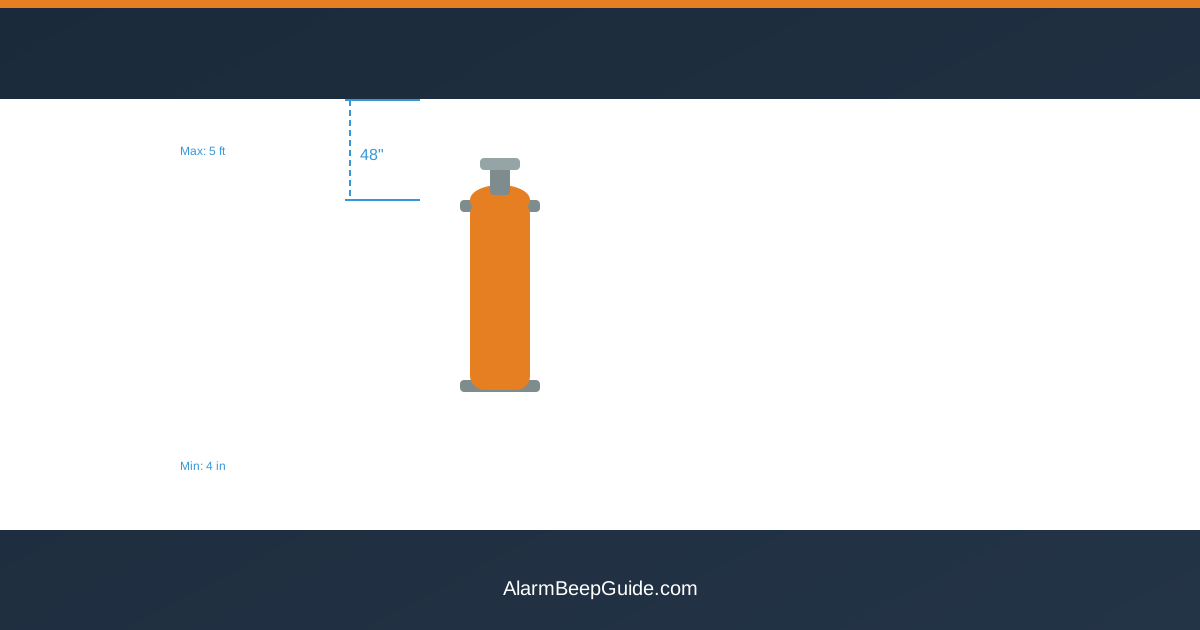
Most home extinguishers are mounted so the handle is about 3.5 to 5 feet from the floor. This height keeps the unit accessible for most adults while staying out of the way of kids and pets.
If the extinguisher is very heavy, mount it slightly lower so it is easier to lift. If it is very small, slightly higher can be fine as long as it is still reachable.
A consistent height across the home helps people find the extinguisher quickly. If you have multiple units, try to keep their handles at roughly the same height.
Distance and Travel Path
An extinguisher is most useful if you can grab it without crossing the fire area. A good rule is to keep one near exits or along the path you would take to leave the room.
If your home has multiple floors, keep at least one per level so you do not have to run up or down stairs to reach it.
If your home has a long hallway, consider placing an extinguisher at each end. This shortens travel distance and keeps access clear.
Avoid placing the only extinguisher in a back room. If a fire starts between you and the unit, access becomes difficult.
Where to Place Extinguishers in the Home
Kitchen
Place an extinguisher near the kitchen, but not right next to the stove. You want to reach it without standing over a potential flame. A wall near the exit is a good choice.
Avoid mounting it directly above the stove or behind the range. Heat and steam can shorten its life and make it hard to reach quickly.
Garage or workshop
Place one near the entry door so you can grab it quickly. Keep it away from fuel storage or welding areas.
If your garage has two doors, place the extinguisher near the door you use most often.
Hallways and bedrooms
A hallway extinguisher near sleeping areas gives quick access for nighttime emergencies. Keep it visible and unobstructed.
If your hallway is narrow, place the extinguisher on a wall that does not interfere with foot traffic.
Laundry and utility rooms
Mount one near the entry to the room, not behind appliances. Keep it away from heat sources like dryers or water heaters.
Entryways and exits
An extinguisher near the main entry or back door is easy to reach on the way out. This is a good option for open-plan homes where a single central spot is not obvious.
If you only have one extinguisher, the entryway is often the safest compromise because it keeps the path clear.
Where Not to Place Them
Avoid placing extinguishers:
- Under sinks or inside cabinets.
- Behind doors that could block access.
- Directly above stoves or grills.
- On the floor where they can be knocked over.
- In damp areas that promote rust.
If you cannot see it quickly, it is probably not in the best spot.
If you have young children, place the extinguisher high enough to reduce tampering but still within reach of adults. Some households use a simple safety clip while keeping the unit accessible.
Mounting Hardware Basics
Most extinguishers include a wall bracket. Use appropriate screws or wall anchors so the unit stays secure. If you mount on drywall, use anchors rated for the extinguisher weight.
Check that the extinguisher can lift straight out of the bracket without snagging. A tight or loose bracket can slow access.
Renters and Small Spaces
If you rent or prefer not to drill, consider a sturdy wall hook or a stand designed for extinguishers. The key is to keep the unit upright, visible, and easy to grab.
In small apartments, place the extinguisher near the main exit or kitchen entry, not directly above the stove. You want to be able to reach it without leaning over a fire source.
If your building has its own extinguishers in hallways, still keep a small unit inside your home for faster access.
If you use a floor stand, place it against a wall so it does not become a trip hazard.
Outdoor Placement
If you keep an extinguisher in a garage, shed, or patio area, choose a location that stays dry. Moisture leads to rust and shortens lifespan.
Avoid placing it where direct sunlight or heat can raise pressure. A shaded wall near the entry door is a good compromise.
If the outdoor area is dusty, check the nozzle more often to make sure it is not blocked.
Some people use a weatherproof cabinet for outdoor placement. If you do, keep it unlocked and clearly marked.
Visibility and Access Tips
Keep extinguishers at eye level whenever possible so they are easy to spot. If the unit blends into the wall, a small label or sign nearby can help people locate it quickly.
Make sure the extinguisher is not blocked by hanging coats, boxes, or furniture. A clear path makes a real difference in an emergency.
If you have guests or family members who may not know your layout, a visible location near the main exit is the simplest choice.
Consider adding a small label on the wall above the extinguisher. It can make the location obvious in low light.
If you keep multiple extinguishers, try to keep them in similar spots on each floor so the location feels familiar.
Open Floor Plans
Open layouts can make it harder to choose a clear location. In these homes, place the extinguisher near the main exit or near the kitchen entry, not in the middle of the open space where it can be bumped.
If the kitchen opens into the living area, consider a wall between the kitchen and hallway so you can grab the extinguisher while staying near a path to leave.
Avoid placing it behind tall decor or furniture that blocks sight lines across the room.
When It’s Usually Safe to Ignore
These situations are usually routine:
- The extinguisher is visible and mounted at a comfortable height.
- It is near an exit and easy to reach.
- The path to it is clear.
If these basics are true, small placement tweaks are optional.
When It’s Worth Checking Further
It is worth checking further if:
- You would have to reach through the fire area to access the extinguisher.
- The extinguisher is hidden or blocked by storage.
- It is mounted too high to lift safely.
- It sits near a heat source or in a damp area.
- The extinguisher is behind a door that is usually closed.
In those cases, moving it a few feet can make a big difference.
Basic Non-Technical Checklist
- Mounted near an exit.
- Handle about chest height for easy grab.
- Visible and not blocked by storage.
- Not too close to a likely fire source.
- Easy for all household members to reach.
- Not hidden behind doors or curtains.
For type selection, see Fire Extinguisher Types Explained: ABC, BC, and K.
Recheck placement if you move furniture or appliances.
Related Extinguisher Guides
- Fire Extinguisher Pressure Gauge: How to Read It Correctly
- Fire Extinguisher Inspection Checklist
- Fire Extinguisher Types Explained: ABC, BC, and K
- When to Replace a Fire Extinguisher: 8 Critical Warning Signs
FAQ
Q: How high should I mount a home fire extinguisher? A: For most homes, the handle is about 3.5 to 5 feet from the floor. Adjust slightly lower for heavy units.
Q: Should I keep an extinguisher under the kitchen sink? A: It is better to keep it visible and reachable. Under-sink storage can be hard to access quickly.
Q: How many extinguishers should I have at home? A: Many homes keep one per floor and one near the kitchen. The exact number depends on layout and risks.
Q: Can I place an extinguisher in the garage? A: Yes, but keep it away from fuel storage and mount it near the entry door.
Q: Is it OK to place an extinguisher on the floor? A: It is safer to mount it. Floor placement can lead to damage or blocked access.
Q: Should I place one near the stairs? A: If your stairs are a common path between floors, a nearby extinguisher can be useful as long as it does not block the walkway.
Q: Can I keep an extinguisher in a pantry? A: It is better to keep it visible, but a pantry can work if the extinguisher is easy to reach and the door is usually open during cooking.
Q: Should I mount it inside a cabinet? A: Cabinets often slow access. If you must use one, add a clear label and keep the cabinet uncluttered.
Q: Should I place one near an outdoor grill? A: You can keep one nearby, but not directly next to the grill. Place it within reach while keeping a clear path away from heat and grease.
Calm Summary
A well-placed extinguisher is easy to grab and safe to use. Mount it at a reachable height, keep it visible, and place it near exits rather than close to fire sources. Small placement changes make a big difference in a real emergency.
If you only make one change, move the extinguisher to a clearer, more visible spot.
A few minutes of placement work can help everyone feel prepared. Small adjustments now can save time later, so review placement once a year or after a remodel.
Keep it simple to keep stress low and everyone on the same page. A consistent placement plan helps guests and kids know where to look and reduces confusion during a stressful moment. Clear placement helps everyone act quickly in a pinch.
FAQ
How high should a fire extinguisher be mounted?
Is it okay to store an extinguisher in a cabinet?
Should I keep an extinguisher in the kitchen?
What about the garage?
Do I need multiple extinguishers?
Related Articles
- Fire Extinguisher Types Guide — choosing the right class
- Fire Extinguisher Inspection Checklist — monthly inspection steps
- Fire Extinguisher Pressure Gauge Reading — checking charge status