Fire extinguishers are labeled by class to show what kinds of fires they can handle. The right type matters more than brand. This guide explains the common extinguisher types in plain language and helps you choose the safest option for your home.
Problem Explanation
A fire extinguisher is only effective if it matches the type of fire. That is why the label matters. The letters on the label tell you what the extinguisher is designed to handle. Using the wrong type can make a fire worse.
Most homes do well with an ABC extinguisher placed in key areas. Specialty types are useful in kitchens or workshops where specific hazards are common.
Why Extinguisher Type Matters
Different fires burn in different ways. A grease fire is not the same as a paper fire. Electrical fires require a non-conductive agent. The correct extinguisher type helps control the fire without making it spread.
Understanding the basic classes makes selection simple.
How to Read the Label
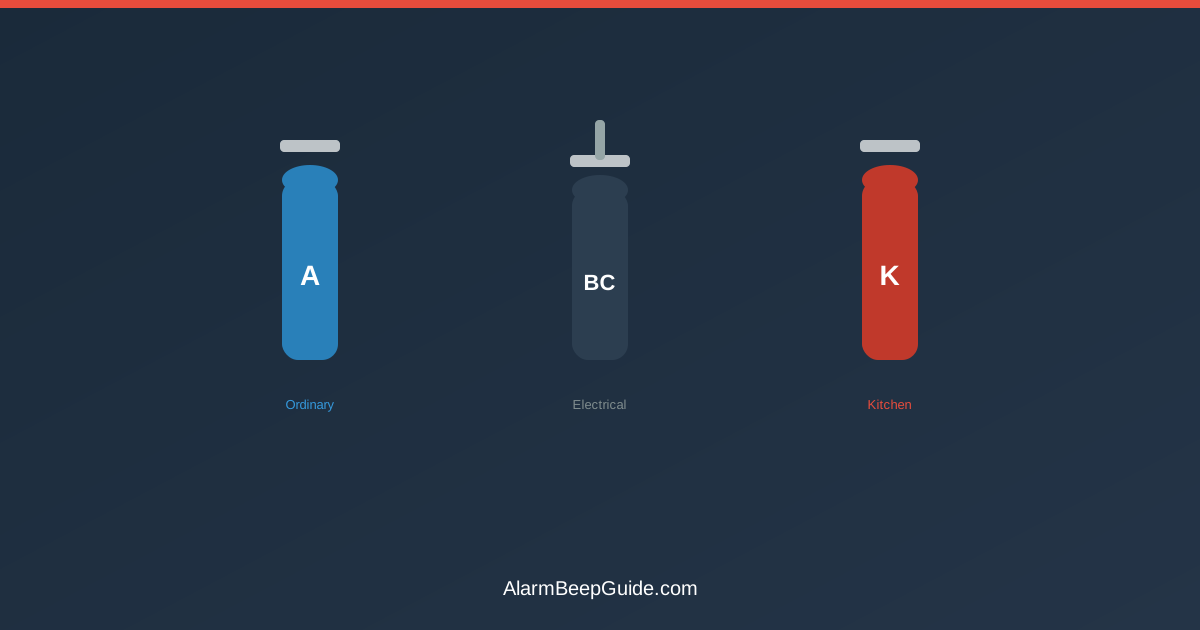
Look for the letters (A, B, C, or K) on the front label. These indicate what the extinguisher can handle. Many labels also include small icons showing a trash can (Class A), a gas can (Class B), or an electrical plug (Class C).
If you see a letter missing, the extinguisher is not meant for that type of fire.
Class A Fires
Class A fires involve ordinary combustibles such as:
- Wood
- Paper
- Cardboard
- Fabric
Water and ABC extinguishers work on Class A fires. These are the most common in homes.
Examples in a home include a small trash can fire, cardboard stored near a heater, or a fabric item near a lamp. These are best handled by an ABC or water extinguisher if the fire is small and you have a clear exit path.
Class B Fires
Class B fires involve flammable liquids such as:
- Gasoline
- Oil
- Paint thinners
- Grease (not cooking grease in pans)
Class B fires require an agent that smothers or interrupts the fuel. ABC and BC extinguishers are typical choices.
In homes, Class B risks often appear in garages or workshops where fuels or solvents are stored.
Class C Fires
Class C fires involve energized electrical equipment. The extinguisher must be non-conductive. ABC, BC, and CO2 extinguishers are used for Class C fires.
Once the power is shut off, the fire becomes Class A or B depending on what is burning.
Examples include small electrical appliances, cords, or panel areas. The key is to avoid water and use a non-conductive extinguisher.
Class K Fires
Class K fires involve cooking oils and fats in commercial or high-heat kitchen settings. These are not the same as small grease flare-ups on a pan. Class K extinguishers are designed for hot cooking oils and are common in restaurants.
For most homes, a standard ABC extinguisher and safe cooking habits are sufficient. If you deep-fry often, a Class K unit is a helpful upgrade.
Common Extinguisher Types
ABC (dry chemical)
This is the most common home extinguisher. It works on Class A, B, and C fires. It leaves powder residue, which can be messy but effective.
BC (dry chemical)
BC extinguishers work on flammable liquids and electrical equipment. They do not work on ordinary combustibles like wood or paper.
CO2
CO2 extinguishers work on Class B and C fires. They leave no residue but are less effective on Class A materials.
Water or foam
Water extinguishers work on Class A only. Foam units may cover Class A and B. Water should not be used on electrical or grease fires.
Wet chemical (Class K)
These are designed for hot cooking oils and commercial kitchens. They cool and smother the fire.
Specialty and Compact Options
Some households keep small aerosol-style extinguishers in kitchens or cars. These can be convenient for very small flare-ups, but they are not a full substitute for a rated ABC extinguisher. If you use a compact option, keep a standard extinguisher as your primary tool.
Kitchen fire blankets are another option for small stove incidents. They can complement, but not replace, a standard extinguisher.
If space is tight, a smaller ABC unit is still better than having no extinguisher at all.
Ratings and Size Basics
Extinguisher labels often include numbers, such as 2A:10B:C. The numbers indicate relative capacity. A higher number generally means more agent and longer discharge time, but the unit also weighs more.
For most homes, a small to medium ABC unit is easy to handle and effective for early-stage fires. If you are not comfortable lifting a heavy extinguisher, choose a lighter model and place it where it is easy to grab.
Most portable extinguishers discharge in a short window, often 8 to 20 seconds. That is another reason placement and practice matter. You want the unit close enough that those seconds count.
Residue and Cleanup Considerations
Dry chemical ABC extinguishers leave powder residue. It is effective but can be messy and may require cleanup around electronics.
CO2 leaves no residue but is less effective on Class A materials. It can be useful near electronics but is not a full replacement for an ABC unit.
Foam and water extinguishers are cleaner on certain materials but are limited to specific classes. Match the extinguisher to the risk, not to the cleanup preference.
If cleanup is a concern, consider having both: an ABC unit for general coverage and a small CO2 unit for sensitive electronics.
How to Choose for Each Area
Kitchen
Most homes do well with a small ABC extinguisher near the kitchen, placed away from the stove so you can reach it safely. If you deep-fry often, consider a Class K extinguisher.
Garage or workshop
An ABC extinguisher covers common hazards like wood, electrical tools, and small fuel containers. If you store large amounts of flammable liquids, a BC or CO2 unit can be helpful.
Bedrooms and hallways
An ABC extinguisher in a hallway near bedrooms can cover common household materials and electronics.
Laundry or utility area
An ABC extinguisher is usually enough. Keep it accessible and away from heat sources.
Basement or storage areas
Basements often store cardboard, paint, or tools. An ABC extinguisher is a good default, and placement near stairs helps with access.
Home office or electronics area
If you have a home office with computers or AV equipment, an ABC extinguisher is still a good default. If you prefer less residue, a small CO2 unit can be added, but it should not replace the ABC unit.
Common Selection Mistakes
These mistakes are easy to avoid:
- Buying a BC unit for general home use and missing Class A coverage.
- Storing the only extinguisher under the sink or behind a door.
- Choosing an overly heavy unit that no one can lift comfortably.
- Assuming a green gauge means the unit is ready without checking the pin and seal.
If you keep one ABC extinguisher per floor and place them near exits, you will cover most common needs.
Basic Use Reminder
Most extinguishers follow the PASS steps: pull the pin, aim at the base, squeeze the handle, and sweep side to side. Keep a clear exit path behind you and use the extinguisher only if the fire is small and you feel safe doing so.
If a fire is spreading or you are unsure, leave the area and follow local guidance.
Vehicles and Travel Use
Small extinguishers are common in cars, RVs, and boats. These are typically BC or small ABC units. They are meant for very small fires and should be stored securely so they do not become projectiles.
If you keep one in a vehicle, check it more often because heat and vibration can shorten its lifespan.
Keep the extinguisher in a mount or strap so it stays secure during driving.
When It’s Usually Safe to Ignore
These situations are usually routine:
- You have a standard ABC extinguisher in a central location.
- Your extinguisher is rated for A, B, and C and the gauge is in green.
- You only cook on a normal stove and do not deep-fry often.
If the extinguisher is the right type for your common risks and is well maintained, you are likely in good shape.
If you are unsure, an ABC unit is the safest default for most households.
When It’s Worth Checking Further
It is worth checking further if:
- You keep fuel or chemicals in a garage or shed.
- You deep-fry often or cook with large quantities of oil.
- You run a workshop with electrical tools and solvents.
- You are unsure what type your extinguisher is.
In these cases, a second unit or a specialty type may be helpful.
Basic Non-Technical Checklist
- Choose ABC for general home coverage.
- Add BC or CO2 for fuel-heavy areas if needed.
- Consider Class K for frequent deep-frying.
- Place units where you can reach them quickly.
- Check the gauge monthly.
- Review the label to confirm the extinguisher matches the room’s hazards.
For placement details, see Fire Extinguisher Mounting Height and Placement.
Related Extinguisher Guides
- Fire Extinguisher Pressure Gauge: How to Read It Correctly
- Fire Extinguisher Inspection Checklist
- Fire Extinguisher Mounting Height and Placement
- When to Replace a Fire Extinguisher: 8 Critical Warning Signs
FAQ
Q: Is ABC enough for most homes? A: Yes. ABC extinguishers cover the most common household fires and are a good general choice.
Q: Can I use water on a grease fire? A: No. Water can spread a grease fire. Use a lid to smother the pan and have an ABC or Class K extinguisher nearby for larger flare-ups.
Q: Do I need a Class K extinguisher at home? A: Not usually. It is useful if you deep-fry often or cook with large amounts of oil.
Q: What does BC mean on an extinguisher? A: It means the extinguisher is designed for flammable liquids (B) and electrical equipment (C).
Q: Are CO2 extinguishers good for homes? A: They can be useful for electrical equipment, but they do not work on ordinary combustibles. Most homes are better served by ABC.
Q: How many extinguishers should a home have? A: Many homes keep one on each floor and one near the kitchen. The exact number depends on your layout and risk areas.
Q: Can I use an ABC extinguisher on electronics? A: ABC units are rated for Class C electrical fires, but they leave powder residue. For sensitive electronics, a CO2 unit is cleaner, but ABC is still acceptable in many home situations.
Q: Do I need different types in different rooms? A: Not always. ABC covers most household risks. Specialty units are useful if you have specific hazards like large amounts of cooking oil or fuels.
Calm Summary
Extinguisher types tell you what fires they can handle. ABC is the most practical choice for most homes, while BC, CO2, and Class K units are useful for specific risks. Choose the right type, place it where you can reach it, and keep it maintained.
When in doubt, start with ABC and add specialty units if needed.
It covers the widest range of common home risks.
FAQ
What does ABC mean on a fire extinguisher?
Is BC a good choice for a kitchen?
Do I need a Class K extinguisher at home?
Can I use an ABC extinguisher on electrical fires?
Do different types come in different sizes?
Related Articles
- Fire Extinguisher Inspection Checklist — monthly and annual inspection steps
- Fire Extinguisher Mounting Height and Placement — wall mounting requirements
- Fire Extinguisher Pressure Gauge Reading — how to check the gauge
- When to Replace a Fire Extinguisher — lifespan and replacement timing