Heat detectors beep for different reasons than smoke detectors, and knowing the difference could save you from a false sense of security. Here’s when to use heat detectors, what their beep patterns mean, and why they’re not interchangeable with smoke alarms.
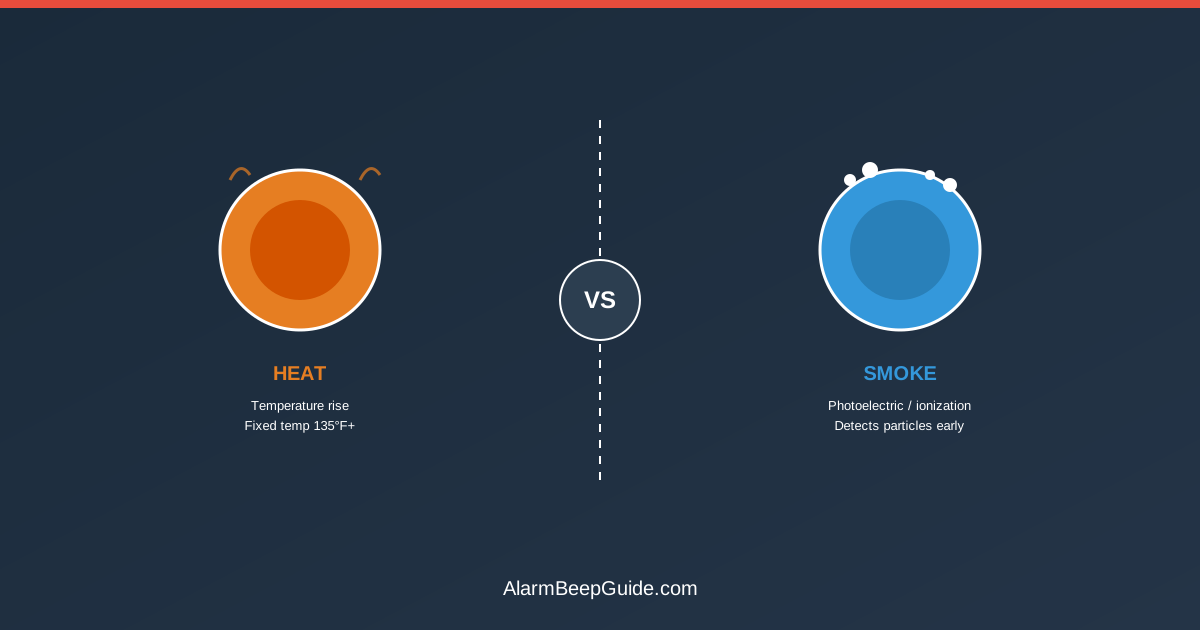
Heat Detectors vs. Smoke Detectors: Critical Differences
Heat Detectors:
- Trigger at specific temperature (usually 135°F or 194°F)
- Immune to smoke, dust, and steam
- Slower response time than smoke detectors
- Prevent false alarms in kitchens, attics, garages
Smoke Detectors:
- Trigger when smoke particles detected
- Faster response to smoldering fires
- Prone to false alarms from cooking, steam
- Required in bedrooms and hallways
Important note: Heat detectors activate later than smoke detectors. Never use heat detectors as your primary fire protection. If nuisance alarms are your main issue, see Stop Smoke Detector False Alarms: 9 Proven Fixes.
Where Heat Detectors Belong
Ideal Locations:
- Kitchens: Replace smoke detectors to prevent cooking false alarms
- Garages: Vehicle exhaust won’t trigger false alarms
- Attics: Dust and temperature extremes won’t cause problems
- Mechanical rooms: Furnaces and water heaters create heat but not always smoke
- Unfinished basements: Dusty, humid environments
Where You MUST Use Smoke Detectors:
- Bedrooms (every sleeping room)
- Hallways outside bedrooms
- Every level of the home including basement
- Living rooms and family rooms
The Rule: Heat detectors supplement smoke detectors in problem areas. They don’t replace them. For placement basics, see Best Smoke Alarms for Home Safety (What Actually Matters).
Heat Detector Beep Patterns Decoded
Single Beep Every 60 Seconds:
- Low battery warning
- Replace battery (most heat detectors use 9V or AA)
- Same as smoke detector low battery pattern
Three Beeps, Pause, Three Beeps (Repeating):
- Detector has triggered (high heat detected)
- Investigate promptly—this usually means a high temperature condition
- Don’t assume false alarm with heat detectors
Five Beeps Every Minute:
- End of life warning
- Check manufacture date (most last 10 years)
- Replace entire unit
Continuous Rapid Beeping:
- Alarm condition (temperature threshold exceeded)
- Leave the area and follow local guidance
- Contact emergency services if advised by local guidance
How Heat Detectors Work
Two Types of Heat Detection:
Fixed Temperature:
- Activates at specific temperature (e.g., 135°F, 194°F)
- Common in residential units
- Consistent, predictable activation
- Slower response but prevents false alarms
Rate-of-Rise:
- Detects rapid temperature increase (15°F per minute)
- Faster response than fixed temperature
- More expensive, often commercial grade
- Better for spaces where ambient temperature varies
Most Residential Units: Combine both technologies for optimal protection.
Common Heat Detector Problems
Problem 1: Triggers When Oven is Used
Why It Happens: Heat detector placed too close to oven or stove, or temperature threshold is too low.
The Fix:
- Maintain 10-15 feet from cooking appliances
- Use 194°F detector instead of 135°F in kitchens
- Relocate detector to cooler area of kitchen
- Ensure proper ventilation reduces ambient heat
Problem 2: Never Triggers During Testing
Important note: Unlike smoke detectors with test buttons, heat detectors are harder to test.
Safe Testing Method:
- Do NOT use open flames
- Do NOT use heat guns (can damage detector)
- Use the test button (if equipped)
- Have professional testing done annually
- Replace at 10 years regardless of testing
Why DIY Heat Testing Is Risky: Applying direct heat can melt plastic components, damage sensors, or create fire hazards.
Problem 3: Chirping in Garage During Winter
Why It Happens: Extreme cold can affect battery performance, similar to smoke detectors.
What to Do:
- Replace battery with fresh alkaline battery
- Consider lithium batteries (better cold performance)
- Insulate garage if possible
- Accept that detectors in unheated spaces need more frequent battery changes
Battery Maintenance for Heat Detectors
Battery Type Matters:
- Alkaline 9V: Standard, replace annually
- Lithium 9V: Longer life, better temperature range
- Sealed 10-year lithium: Built-in, replace entire unit at end of life
- Hardwired with battery backup: Replace backup battery every 2 years
Extreme Temperature Impact: Heat detectors in garages and attics experience battery drain faster due to temperature extremes.
Best Practice:
- Replace batteries every 6 months in unconditioned spaces
- Use lithium batteries for better performance
- Test monthly, especially in temperature extremes
Understanding Temperature Ratings
135°F (57°C) Detectors:
- Standard residential temperature
- Suitable for most rooms
- May false alarm in hot attics or near heating equipment
194°F (90°C) Detectors:
- Commercial/industrial grade
- Better for kitchens, attics, mechanical rooms
- Slower response but prevents false alarms
Which to Choose:
- Living spaces: 135°F
- Kitchens: 194°F or combination rate-of-rise
- Attics: 194°F (attics can reach 150°F in summer)
- Garages: 135°F usually fine
- Near furnaces/water heaters: 194°F
Installation Guidelines
Mounting Location:
- On ceiling, at least 4 inches from walls
- Center of room if possible
- Avoid corners (dead air zones)
- Away from HVAC vents (rapid temperature changes interfere)
Height Considerations: Heat rises. Ceiling mount is essential for heat detectors to work properly. Wall mounting significantly delays activation.
Spacing Rules:
- Residential: One per room where needed
- Commercial: Follow NFPA 72 spacing requirements
- Consult local fire code for specific requirements
Combination Smoke/Heat Detectors
What They Are: Single units containing both smoke sensor and heat sensor.
Advantages:
- Best of both worlds
- Faster smoke detection, reliable heat backup
- Fewer devices to mount and maintain
- Smart technology chooses which sensor to prioritize
Disadvantages:
- More expensive ($50-100 vs $15-30)
- If one sensor fails, you replace entire unit
- More complex troubleshooting
Best Use Cases:
- Kitchens (smoke sensor for protection, heat sensor prevents false alarms)
- Homes where false alarms are a persistent problem
- Smart home integration desired
When Heat Detectors Chirp: Troubleshooting Steps
Step 1: Identify Beep Pattern Listen carefully and match to patterns above. Different patterns = different problems.
Step 2: Replace Battery Even if pattern doesn’t indicate low battery, try this first. Fixes 70% of chirping.
Step 3: Clean the Detector Dust and debris rarely affect heat detectors like they do smoke detectors, but clean anyway:
- Vacuum vents gently
- Wipe exterior with damp cloth
- Let dry completely before reinstalling
Step 4: Check Manufacture Date Heat detectors expire after 10 years. If it’s old, replace it. End-of-life beeping can’t be silenced.
Step 5: Test Using Test Button Verify detector responds. If it doesn’t respond to test button, it’s failed—replace it as soon as practical.
Step 6: Check for Recall Visit cpsc.gov and search for your model. Some detectors have been recalled.
Heat Detector Placement Mistakes
Mistake 1: Using Heat Detector in Bedroom Bedrooms REQUIRE smoke detectors. Heat detectors respond too slowly to save you from smoke inhalation while sleeping.
Mistake 2: Placing Too Close to Heat Source Heat detectors within 5 feet of furnaces, water heaters, or ovens may false alarm.
Mistake 3: Attic Detector Wrong Temperature Rating 135°F detector in hot attic = constant false alarms in summer. Use 194°F rated units.
Mistake 4: Garage Detector Placed Wrong Heat detectors in garages should be away from garage door (cold air rushes in) and away from car exhaust path.
Code Requirements and Legal Considerations
Building Code: Most codes REQUIRE smoke detectors in specific locations. Heat detectors can be added but don’t fulfill smoke detector requirements.
Insurance Implications: Some homeowner’s insurance policies require working smoke detectors. Heat detectors alone don’t meet this requirement.
What’s Required:
- Smoke detectors in every bedroom
- Smoke detectors outside each sleeping area
- Smoke detector on every level of home
- Heat detectors are supplementary, not replacements
Verify Your Local Code: Requirements vary. Check with local fire marshal or building department.
When to Replace Heat Detectors
The 10-Year Rule Applies: Just like smoke detectors, heat detectors expire after 10 years.
Replace Immediately If:
- Manufacture date is 10+ years ago
- Doesn’t respond to test button
- Physical damage visible
- End-of-life chirping pattern
- After triggering in actual fire (even if detector appears fine)
Proactive Replacement: At 8-9 years, consider replacement before expiration. Don’t risk failure when you need it.
Smart Heat Detectors
Features of Modern Heat Detectors:
- Smartphone notifications when triggered
- Battery status monitoring via app
- Integration with home security systems
- Voice alerts identifying location
- Remote testing capability
Cost: $80-150 vs. $15-40 for standard units
Worth It?: If you have a smart home system, integration adds value. For standalone use, standard detectors work fine.
The Kitchen Dilemma: Heat vs. Smoke
The Problem: Kitchens need fire protection but smoke detectors false alarm constantly from cooking.
The Solutions:
Option 1: Heat Detector Only in Kitchen
- Prevents cooking false alarms
- Slower response time to actual fires
- Install smoke detector just outside kitchen entrance
Option 2: Photoelectric Smoke Detector with Hush
- Better resistance to cooking false alarms
- “Hush” button silences false alarms temporarily
- Faster response than heat detector
Option 3: Combination Smoke/Heat Detector
- Best protection
- Smart algorithms reduce false alarms
- Most expensive option
Our Recommendation: Combination unit if budget allows, otherwise heat detector IN kitchen with smoke detector just outside kitchen.
The Bottom Line
Heat detectors prevent false alarms in kitchens, garages, and attics, but they’re slower than smoke detectors and should never replace them in bedrooms or hallways.
Single chirps mean low battery—replace it as soon as practical. Continuous alarms mean high heat detected—leave the area and follow local guidance. Five beeps per minute means the detector is expired—replace the entire unit.
Use 135°F detectors in living spaces, 194°F in attics and kitchens. Mount on ceiling, test monthly, and replace every 10 years.
Heat detectors are supplementary fire protection, not primary protection. Keep your smoke detectors too—they’re faster when seconds count, and that speed saves lives.
FAQ
Can I replace my kitchen smoke detector with a heat detector?
What temperature do heat detectors trigger at?
Do heat detectors need to be replaced like smoke detectors?
Related Articles
- Best Smoke Alarms for Home Safety — choosing the right alarm type
- Smoke Detector Placement in House — where heat vs smoke alarms go
- Smoke Detector False Alarms: Proven Fixes — reducing nuisance triggers