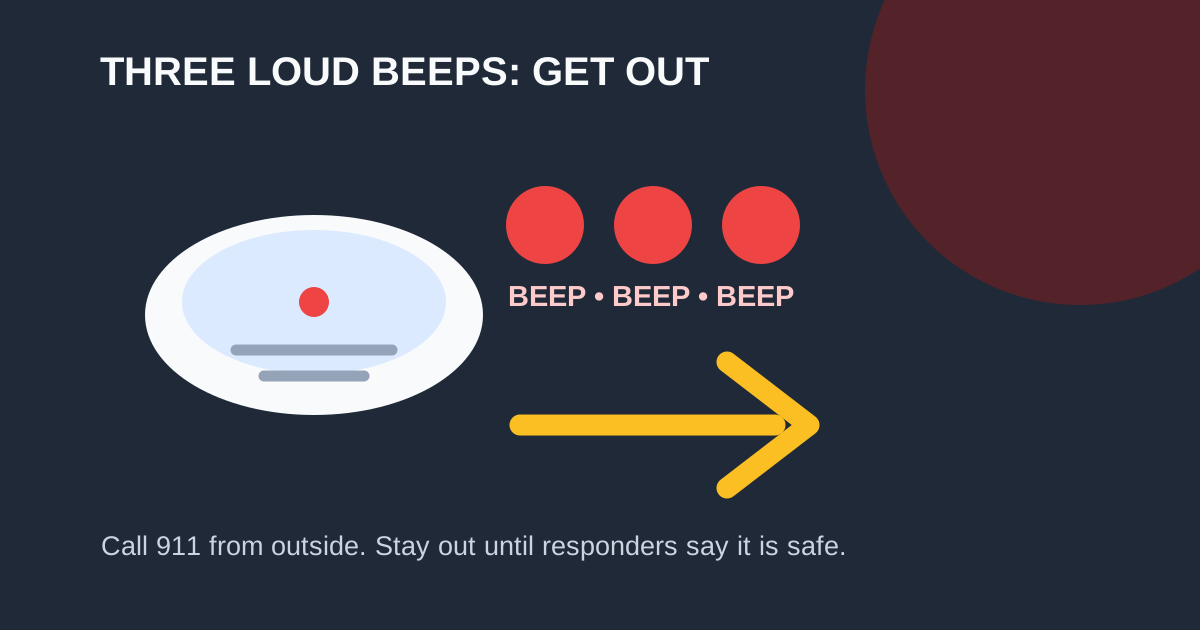
A continuing set of three loud beeps—beep, beep, beep, pause, then repeat—should be treated as a smoke or fire alarm. The National Fire Protection Association says to get out, call 911, and stay out. Do not remain inside to decide whether the smoke is visible, whether cooking caused it, or whether the sound will stop.
If the unit is a combination smoke/CO alarm, a different loud pattern (typically four beeps) can indicate carbon monoxide. When there is uncertainty about which hazard is present, leave first and follow emergency guidance.
What 3 Beeps Means by Manufacturer
The three-beep smoke alarm pattern is fairly consistent across major manufacturers because it follows the UL 217 smoke alarm standard. Here is what verified manufacturer documentation says:
First Alert and BRK Models
According to First Alert’s specification sheet for the SC5 Smart Smoke & Carbon Monoxide Alarm, the smoke alarm signal is defined as 3 beeps with a flashing red LED. The CO alarm signal on the same device is 4 beeps. This 3-beep/4-beep distinction is common across First Alert and BRK combination alarms.
Kidde Models
Kidde’s smoke alarm support documentation describes the smoke alarm pattern as a continuous set of three loud beeps that repeat. On Kidde combination smoke/CO alarms, the CO alarm produces four beeps to distinguish it from the smoke alarm.
Nest Protect
Nest Protect uses a different approach: it first gives a “Heads-Up” warning with a voice announcement (“Heads up, there’s smoke in the [room name]”) before escalating to a full emergency alarm with a loud horn and voice (“Emergency, there’s smoke in the [room name]”). If you hear three repeating beeps from a Nest Protect, it has reached the full emergency alarm stage.
What to Do Right Now
- Get everyone outside. Take people and pets with you and use your home fire-escape plan. If you do not have a plan, leave by the nearest safe exit.
- Call 911 or your local emergency number from outside. Do not go back inside to use a phone.
- Stay out until emergency responders say it is safe to return. A fire can re-ignite or produce toxic gases even after flames appear to be out.
- Do not disable the alarm by removing its battery, disconnecting it, or covering it. If the alarm is sounding, it is doing its job.
How to Tell a Real Alarm From Other Sounds
Not every sound from a smoke detector is an emergency alarm. Here is how to tell them apart:
| Sound | Pattern | Meaning | Action |
|---|---|---|---|
| Smoke alarm | 3 loud beeps, repeating | Smoke or fire detected | Evacuate, call 9-1-1 |
| CO alarm (combo units) | 4 loud beeps, repeating | Carbon monoxide detected | Evacuate, call 9-1-1 |
| Low battery | 1 chirp every 30–60 seconds | Battery needs replacement | Replace battery |
| End of life | Chirp pattern (varies by model) | Sensor has expired | Replace detector |
| Test | Short series of beeps when button pressed | Manual test only | Normal — no action needed |
Key distinction: A loud, repeating three-beep pattern that wakes you up or startles you is an alarm. A single short chirp that repeats every minute is a maintenance signal, not an emergency.
Common Causes of Three-Beep Alarms
If emergency responders determine there was no fire, the alarm may have been triggered by:
- Cooking smoke or steam: The most common cause of nuisance alarms. The NFPA recommends installing smoke alarms at least 10 feet from cooking appliances.
- Shower steam: Bathrooms generate steam that can trigger a nearby alarm, especially if the alarm is installed too close to the bathroom door.
- Dust or insects: Accumulated dust in the sensor chamber can cause false alarms. Clean the detector regularly with compressed air.
- Humid air after a hot shower: Similar to steam, high humidity can trigger photoelectric sensors.
- Nearby construction dust: Drywall dust, sawdust, and insulation particles can enter the sensor chamber.
- Low temperature: Some models may behave unpredictably in very cold environments (below 40°F).
If your alarm goes off repeatedly and there is no fire, see our smoke detector false alarms guide for prevention tips.
If the Sound Is Not a Loud Repeating Alarm
An isolated chirp, a display code, or a different cadence can mean battery, end-of-life, fault, or another model-specific condition. It is not safe to label those meanings from the number “three” alone. Check the alarm’s label for its make and model, then consult the current manufacturer instructions.
For a short maintenance chirp after you have ruled out an active alarm, see Smoke Alarm Chirping: Check the Battery, Date, and Manual.
After the Emergency: Next Steps
Once emergency responders have cleared your home:
- Identify the cause. If it was cooking, steam, or dust, take steps to prevent recurrence (relocate the alarm, clean it, adjust cooking habits).
- Test the alarm. Press the test button to confirm the alarm is functioning. Replace the unit if it fails the test.
- Check the age. If the alarm is more than 10 years old (from the manufacture date), replace it regardless of whether it passed the test.
- Review placement. If the alarm was too close to a kitchen or bathroom, consider relocating it following NFPA placement guidelines. See our smoke detector placement guide for details.
FAQ
Does three beeps mean a fire even when I cannot see smoke?
Yes. Treat a continued loud three-beep pattern as a smoke or fire alarm. Smoke can be hidden or develop quickly. The NFPA recommends getting out, calling 911, and staying out until responders say it is safe.
What if the beeps stop after I leave?
Stay outside and follow emergency-responder direction. A quiet alarm does not establish that the home is safe to re-enter. Fire or hazardous gases may still be present.
My alarm beeps three times when I cook. Is it broken?
Not necessarily. Cooking smoke and steam are the most common causes of nuisance smoke alarms. The NFPA recommends installing smoke alarms at least 10 feet from cooking appliances. If your alarm is closer than that, consider relocating it. You can also use the hush button (if your model has one) to temporarily silence nuisance alarms.
Does a test button make the same sound?
A test can produce a loud alarm sound, but it checks basic circuitry. It does not prove that the sensor is responding to real smoke. Follow the manufacturer’s test instructions, typically pressing and holding the test button until the alarm sounds.
How is a smoke alarm (3 beeps) different from a CO alarm (4 beeps)?
On most combination smoke/CO detectors, the smoke alarm produces three repeating beeps while the CO alarm produces four repeating beeps. This distinction helps you identify which hazard is present. If you are unsure, treat any loud repeating alarm as an emergency and evacuate.
Will the fire department charge me for responding to a false alarm?
Most jurisdictions do not charge for the first response to a residential alarm. However, repeated false alarms may result in fees in some areas. Check your local fire department’s policy. Never hesitate to call 911 when an alarm sounds — the risk of not calling is far greater than any potential fee.
Sources
- National Fire Protection Association: Smoke Alarms
- First Alert SC5 Specification Sheet
- Kidde: What Is Causing My Smoke Alarm to Sound, Beep, or Chirp?