Smoke detector false alarms are so annoying that people disconnect detectors entirely—reducing protection in the home. Here’s how to stop false alarms from cooking, showers, and dust without removing your fire protection.
Why False Alarms Happen
Ionization vs. Photoelectric Sensors:
Ionization Detectors:
- Use radioactive material to detect smoke
- Extremely sensitive to small particles
- Better at detecting fast-flaming fires
- Prone to false alarms from cooking
Photoelectric Detectors:
- Use light beam to detect smoke
- Less sensitive to cooking particles
- Better at detecting slow-smoldering fires
- Fewer false alarms overall
The Problem: Most homes have ionization detectors because they’re cheaper, but these trigger more false alarms.
Fix 1: Replace Ionization with Photoelectric
The Single Best Fix: Swap ionization detectors for photoelectric models, especially in kitchens and near bathrooms.
How to Identify What You Have:
- Check label on detector back
- Ionization models say “contains radioactive material”
- Photoelectric models don’t have radiation warning
Replacement Cost: $15-40 per detector
Where to Prioritize:
- Hallway near kitchen (swap first)
- Bedroom above kitchen (swap second)
- Near bathrooms with showers (swap third)
NFPA Recommendation: Use BOTH types in your home—photoelectric near kitchens/baths, ionization in bedrooms and living areas.
Fix 2: Relocate Detectors Away from Triggers
Minimum Distance Rules:
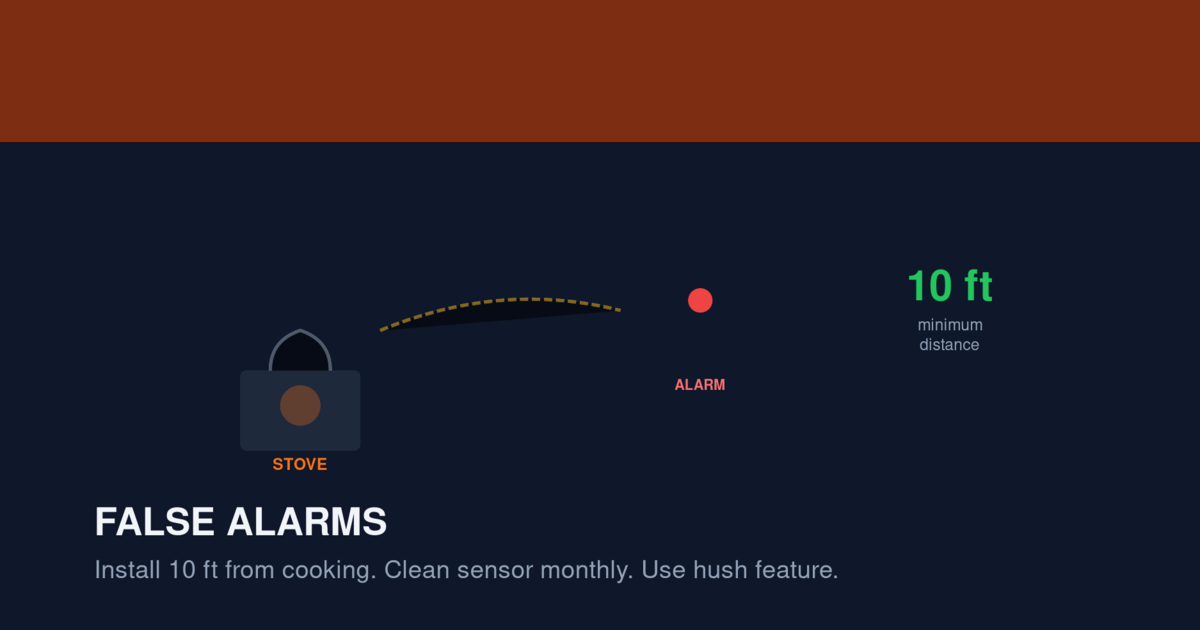
- 20 feet from kitchens: Ideally, but 10-15 feet minimum
- 10 feet from bathrooms: Prevents steam false alarms
- 3 feet from HVAC vents: Prevents dust circulation triggers
- 3 feet from corners: Dead air zones reduce effectiveness
Strategic Relocation: Instead of detector in kitchen, place in hallway just outside kitchen entrance. Still protects kitchen but reduces cooking false alarms by 80%.
Ceiling vs. Wall Mount: If you must mount near kitchen, high on wall (6-12 inches below ceiling) may have fewer false alarms than ceiling mount because less cooking smoke rises that high.
Fix 3: Use the “Hush” Feature Correctly
What “Hush” Does: Temporarily reduces detector sensitivity for 8-10 minutes, then auto-restores.
How to Use:
- Press “HUSH” button when cooking triggers false alarm
- Detector silences or beeps quietly
- After 8-10 minutes, full sensitivity returns
- If smoke still present after hush period, alarm reactivates (this is good—means real fire)
Why This Works: Gives you time to ventilate cooking smoke without disabling detector long-term.
Models with Hush: Most detectors made after 2000. Look for button labeled “HUSH,” “SILENCE,” or “TEST/HUSH.”
What NOT to Do: Remove battery to silence alarm. You’ll forget to replace it, leaving you unprotected.
Fix 4: Improve Kitchen Ventilation
The Root Cause: Cooking smoke spreads through house, triggering detectors far from kitchen.
Ventilation Solutions:
- Range hood: Run on HIGH during cooking, continue 5 minutes after
- Exhaust fan: Install if you don’t have range hood
- Open windows: Create cross-ventilation during cooking
- Point fans outward: Blow cooking smoke outside, not into house
Range Hood Best Practices:
- Clean grease filters monthly (clogged filters don’t ventilate)
- Replace charcoal filters every 6 months (recirculating hoods)
- Vent to exterior if possible (more effective than recirculating)
Fix 5: Clean Detectors Thoroughly
Dust = False Alarms: Dust particles inside detector chamber mimic smoke.
Cleaning Schedule:
- Quick vacuum: Monthly
- Deep clean: Every 6 months
Proper Cleaning Method:
- Turn off detector (if hardwired, flip breaker)
- Remove from mounting bracket
- Vacuum all vents using soft brush attachment
- Use compressed air in short bursts (hold can upright)
- Wipe exterior with slightly damp cloth
- Let dry 15 minutes
- Reinstall
Don’t Use Water or Cleaners: Never spray anything into detector. Moisture damages sensors.
Painting or Renovation Nearby: Cover detectors with plastic bags during dusty work, then clean thoroughly after.
Fix 6: Control Humidity and Steam
Bathroom Steam Problem: Hot shower steam triggers detectors in bathrooms or hallways.
Solutions:
- Run bathroom fan: During and 10 minutes after shower
- Keep door closed: Prevents steam from reaching hallway detector
- Crack window: Allows moisture to escape
- Install heat detector in bathroom: Replaces smoke detector to eliminate steam triggers
Basement Humidity: Damp basements cause false alarms from moisture in detector. Use dehumidifier to maintain 30-50% humidity.
Fix 7: Address Insect and Spider Infestations
Bugs Inside Detector: Insects crawling inside sensor chamber trigger alarms.
How to Tell:
- False alarms increased in warm months
- Visual inspection shows bugs or webs in vents
- Detector is near exterior door or window
Prevention:
- Clean detectors regularly (prevents nests)
- Seal cracks around detector mount (blocks entry)
- Control general household pest problems
- Use air blasts during cleaning to dislodge bugs
If Bugs Persistent: Some detectors have built-in insect screens. Consider upgrading.
Fix 8: Fix Electrical Issues (Hardwired Detectors)
Voltage Fluctuations Cause False Alarms:
Symptoms:
- False alarms during storms
- False alarms when major appliances start
- All interconnected detectors alarm simultaneously
- Detectors beep/chirp randomly
What to Check:
- Loose wire connections in detector
- Loose connection in junction box
- Undersized circuit breaker
- Damaged wiring
When to Call Electrician: If you suspect electrical issues, don’t DIY. Faulty detector wiring is a fire hazard itself.
Fix 9: Replace Old Detectors
Age = More False Alarms: Detector sensors degrade over time, becoming oversensitive or erratic.
Replace After 10 Years: Even if detector seems to work, sensor reliability decreases.
Signs It’s Time:
- Detector manufactured 10+ years ago
- Increasing frequency of false alarms
- Chirps even with fresh battery and hard reset
- Physical damage or discoloration
Modern Detectors Are Better: Newer models have advanced sensing algorithms that reduce false alarms significantly.
Cooking-Specific Strategies
High-Heat Cooking (searing, broiling):
- Turn on range hood BEFORE you start
- Open window for cross-ventilation
- Press “hush” on nearby detector preemptively (some models allow)
- Cook at slightly lower temp if possible
Bacon, Steak, Stir-Fry (high smoke producers):
- Use outdoor grill when possible
- Use cast iron on outdoor burner
- Ensure excellent ventilation before starting
Burnt Food Recovery: When you burn something and detector alarms:
- Remove burnt item from heat
- Open windows and doors
- Use fans to push smoke outside
- Press “hush” on detector
- Ventilate for 10-15 minutes before closing windows
What NOT to Do
Never Remove Battery: You’ll forget to replace it. Use “hush” instead.
Never Cover with Plastic Bag: Unless temporarily during renovation, and remove it as soon as the work is done.
Never Disable Hardwired Detector: Don’t disconnect wiring or remove from circuit.
Never Paint Over Detector: Paint clogs vents and sensors.
Never Ignore Persistent False Alarms: They indicate real problems—wrong detector type, wrong location, or electrical issues.
Combination Alarms: Best of Both Worlds
Dual-Sensor Detectors: Contain both ionization and photoelectric sensors.
How They Work: Advanced algorithm compares readings from both sensors and only alarms when both detect smoke pattern. Reduces false alarms while maintaining sensitivity.
Cost: $30-60 (vs. $15-25 for single-sensor)
Worth It?: If you have persistent false alarm problems despite trying other fixes, dual-sensor detectors are worth the investment.
Best Locations for Dual-Sensor:
- Hallway between kitchen and bedrooms
- Open-concept kitchen/living areas
- Anywhere false alarms are chronic problem
Smart Detectors: Modern Solution
Features That Reduce False Alarms:
- Smartphone notifications (you can tell quickly it’s a false alarm, not wondering)
- Voice announcements (“Smoke detected in kitchen” vs. just beeping)
- Remote hush from phone (silence without climbing ladder)
- Self-testing (catches sensor problems before false alarms)
Examples:
- Nest Protect
- First Alert Onelink
- X-Sense smart detectors
Cost: $80-120 per detector
Advantage: When cooking triggers alarm, you can silence from phone without panic. Still get full protection for real fires.
False Alarms at Specific Times
Middle of Night False Alarms: Usually caused by temperature drop affecting sensor or battery. Replace battery and check for drafts near detector.
During or After Showers: Steam issue. Relocate detector farther from bathroom or replace with heat detector in bathroom itself.
When Heat/AC Turns On: Dust in ductwork blown onto detector. Clean detector and replace HVAC filters.
During Cooking, Every Time: Wrong detector type or placement. Swap to photoelectric and/or relocate farther from kitchen.
Regional Considerations
Humid Climates (Southeast, Pacific Northwest):
- Use photoelectric detectors (less humidity-sensitive)
- Run dehumidifiers
- Ensure bathroom fans work properly
Dry/Dusty Climates (Southwest, Plains):
- Clean detectors monthly (more dust)
- Seal detector vents with fine mesh if dust extreme
- Replace HVAC filters more frequently
Cold Climates:
- Temperature swings cause false alarms
- Keep detectors away from exterior walls
- Ensure home is properly insulated
Testing After Making Changes
Proper Test:
- Press test button—should alarm loudly
- Light a candle, blow out, hold smoking wick 6 inches below detector
- Detector should alarm within 30-60 seconds
- Ventilate and silence
Don’t Over-Test with Smoke: Repeated smoke testing can damage sensors. Test with button monthly, smoke test only when verifying fix.
When to Accept Some False Alarms
Reality Check: Zero false alarms can mean detectors are less sensitive than they should be.
Acceptable False Alarm Rate: 1-2 false alarms per year from cooking = normal and acceptable. Your detectors are properly sensitive.
Unacceptable False Alarm Rate: Weekly or monthly false alarms = problem needs fixing.
The Balance: Detectors that never false alarm might not alarm for real fires either. Slight inconvenience protects your life.
The Bottom Line
Stop smoke detector false alarms by replacing ionization with photoelectric detectors near kitchens, relocating detectors farther from cooking and bathrooms, and improving ventilation.
Use the “hush” button instead of removing batteries. Clean detectors every 6 months. Replace units over 10 years old.
Accept that 1-2 false alarms per year is normal and means your detectors are properly sensitive. If you’re getting false alarms weekly, fix the root cause—wrong detector type, wrong location, or poor ventilation.
Never disable smoke detectors to avoid false alarms. Occasional nuisance alarms are easier to manage than losing protection because a battery was removed and not replaced.
FAQ
Why does my smoke detector go off when I cook?
Related Articles
- Smoke Detector Placement in House — proper placement reduces false alarms
- How to Clean Dust From a Smoke Detector — cleaning reduces nuisance alerts
- Best Smoke Alarms for Home Safety — alarms with fewer false triggers
- First Alert Smoke Detector Chirping — brand-specific guidance